Why 99% of Businesses Fail
:The Vital Role of Branding and Social Media for Offline Businesses
200 BUSINESS IDEAS
Muhammad Irfan
2/2/20264 min read
In the competitive landscape of 2026, the failure statistics for new businesses remain brutal. Roughly 20% of businesses close within the first year, about 50% disappear by year five, and the vast majority—often cited in the 90–99% range over a ten-year period—never achieve long-term survival. While poor financial management, lack of product-market fit, and intense competition are frequently blamed, one critical factor continues to be underestimated: the absence of strong branding combined with an active social media presence.
This problem hits offline businesses—local retail stores, restaurants, salons, gyms, repair shops, and service-based companies—particularly hard. Many owners still believe that a good location, quality products, and word-of-mouth are enough. In reality, in a world where most purchasing decisions begin with a Google search, Instagram scroll, or Facebook recommendation, being invisible online is almost the same as being out of business.
This article explains why so many businesses fail and shows, through real-world examples, why branding and social media are no longer optional luxuries for offline businesses—they are survival requirements.
The Real Reasons Most Businesses Disappear
Business failure reports consistently highlight several root causes:
Running out of cash (around 29–38% of cases)
No real market need or poor product-market fit (around 42%)
Getting crushed by competitors (around 19–23%)
Wrong team or poor marketing execution
What ties many of these failures together is invisibility. When customers cannot easily find you, trust you, or feel emotionally connected to you, they choose someone else—usually the business that appears first in search results or feels more familiar from their social feeds.
Offline businesses suffer most from this invisibility because they often lack the massive advertising budgets of national chains or the built-in discoverability of pure online players. Without branding that creates recognition and social media that drives discovery, foot traffic slowly dries up.
Branding: Turning a Generic Shop into a Destination
Branding is far more than a logo or color scheme. It is the complete story, personality, values, and emotional promise your business makes to customers.
A strong brand makes people feel something—whether it’s trust, excitement, nostalgia, status, or belonging. Without it, even an excellent product becomes interchangeable with cheaper or more convenient alternatives.
Classic example: Borders Books. At its peak, Borders operated hundreds of large, well-stocked bookstores across the United States. Yet it filed for bankruptcy in 2011 and eventually closed almost every location. One major reason was branding failure. Borders never built a powerful, modern brand identity that could compete with Amazon’s promise of endless selection and instant convenience. It remained a “place to buy books” rather than a beloved cultural destination. When digital reading and online shopping took over, Borders had no emotional loyalty to fall back on.
Contrast this with many independent bookstores that survived and even thrived. Shops that branded themselves around curated selections, cozy atmosphere, community events, and a clear personality have often outlasted giants. They became destinations people wanted to visit—not just stores people needed to use.
For offline businesses, branding must be consistent across every customer touchpoint: signage, packaging, staff uniforms, in-store experience, website (even a simple one), and social media. When branding is weak or inconsistent, customers forget you quickly or never form the kind of attachment that brings them back.
Social Media: The New Front Door for Offline Businesses
Social media platforms in 2026 are not just places to post pretty pictures—they are discovery engines, trust builders, and direct lines to customers.
Recent data continues to show that:
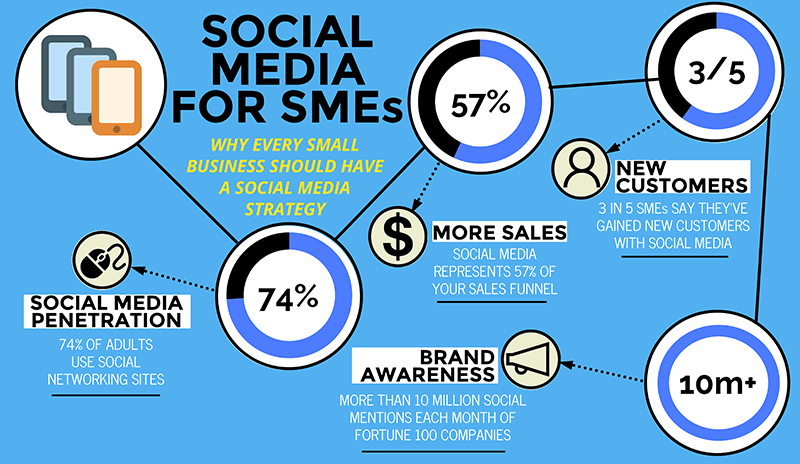
Over 80% of consumers research businesses online before visiting
More than 70% of people are more likely to choose a business they already follow on social media
Local searches with “near me” intent remain extremely high, and social profiles heavily influence who appears trustworthy and relevant
Offline businesses that ignore social media essentially hand their customers to competitors who are visible, engaging, and responsive online.
One of the most famous cautionary tales is Blockbuster. In the late 2000s and early 2010s, Blockbuster had thousands of physical stores and a recognizable brand. However, it failed to adapt its presence to the digital world. While Netflix built a powerful online brand around convenience, personalization, and constant communication with subscribers, Blockbuster largely treated social media as an afterthought. It never built genuine online communities, never created viral moments, and never used digital channels to reinforce its physical locations. By 2010, Blockbuster was bankrupt, and most of its stores were gone.
Successful offline businesses tell the opposite story.
Many local coffee shops, restaurants, and boutiques that exploded in popularity during and after the pandemic did so by leaning heavily into social media. A family-owned pizza restaurant in Chicago, for example, completely turned its business around by posting short, authentic videos of dough being tossed, sauce being made, and customers enjoying meals. Within months, foot traffic doubled—not because the pizza suddenly became better, but because people felt they already knew and liked the place before they walked in.
Similarly, independent bookstores, gyms, barber shops, and boutique clothing stores that regularly share behind-the-scenes content, customer stories, limited-time offers, and local events see dramatically higher visit rates. They turn casual browsers into loyal regulars.
How Offline Businesses Can Start Winning in 2026
To avoid becoming another statistic, offline business owners should focus on these practical steps:
Define a clear brand identity Decide who your business is for, what emotion you want to create, and what makes you different. Invest in professional (or at least clean and consistent) visual identity: logo, colors, typography, and tone of voice.
Build at least one strong social media presence Choose the platform(s) your customers actually use—Instagram and TikTok for visual businesses, Facebook for community-oriented or older demographics, YouTube Shorts for demonstrations.
Post consistently with value Share content that entertains, educates, or inspires—not just sales pitches. Show the people behind the business, the process, happy customers, and local pride.
Encourage user-generated content Ask customers to tag you, repost their photos, and reward them with shoutouts or small perks.
Link online to offline Use social media to drive real-world visits: limited-time in-store offers, events, loyalty perks, or “show this post for 10% off” deals.
Final Thought
The 99% failure rate is not inevitable. It reflects the businesses that refused to evolve. In 2026, customers live hybrid lives—they discover, research, trust, and decide online even when they buy offline.
Branding gives people a reason to care. Social media gives them a way to find you and fall in love before they ever step through your door.
Offline businesses that embrace both are not just surviving—they are becoming the local legends of the next decade.
Connect
Reach out for your free consultation today
Email :info@irfydigital.com
© 2026 Irfy Digital. All Rights Reserved.
Designed & Developed by Irfy Digital.